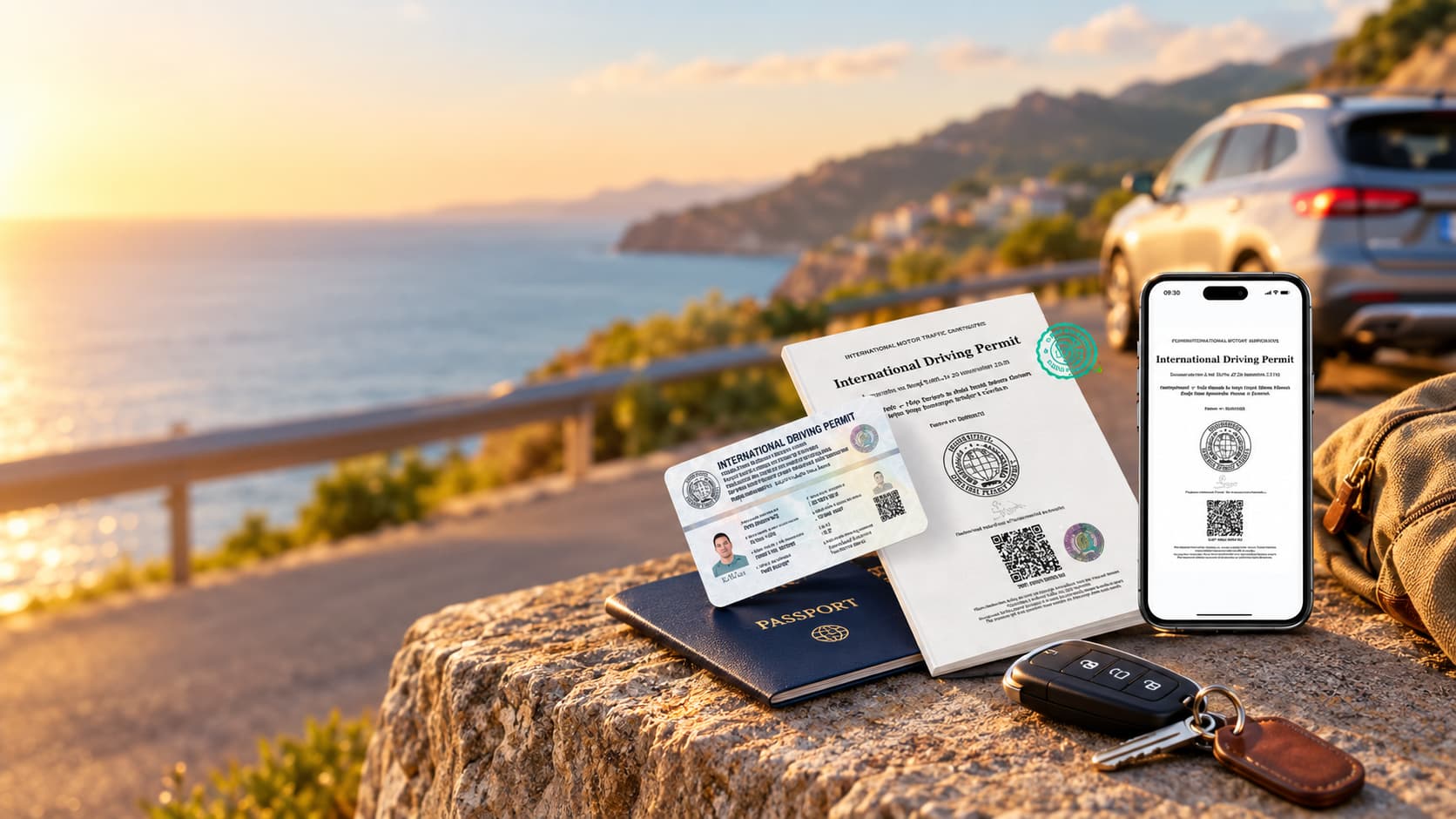

- • An International Driving Permit (IDP) translates your domestic license into 12 languages under UN conventions.
- • Accepted in 150+ countries worldwide for car rentals, roadside inspections, and insurance validity.
- • You can complete your official application online in under 2 minutes with instant digital delivery.
If you have ever searched for an International Driving Permit, you have probably seen two numbers: 1949 and 1968. They sound like model years, but they refer to two major United Nations road traffic conventions: the 1949 Geneva Convention and the 1968 Vienna Convention.
Travelers often wonder which format is better and whether a later date means stronger protection. This guide explains what the two formats mean, why a later date does not make 1968 automatically superior, and how to determine which one your trip requires.
Quick Answer: 1949 Geneva vs 1968 Vienna Convention
The numbers 1949 and 1968 refer to two international road traffic treaties: the 1949 Geneva Convention on Road Traffic and the 1968 Vienna Convention on Road Traffic. Neither format is universally superior—the right one depends strictly on your destination country, your home issuing country, and your rental car agency's terms.
Neither format replaces your original physical driver's license. An International Driving Permit is an official multilingual translation that must always be carried alongside your valid domestic driving license.
Key Differences: 1949 Geneva vs 1968 Vienna Convention
Understanding the distinction between both conventions helps you avoid travel delays and invalid car rentals:
1949 Geneva Convention
Typically valid for up to 1 year. Required by countries such as Japan, the United States, and several Asian and American destinations.
1968 Vienna Convention
Often valid for up to 3 years. Widely adopted across mainland Europe, the UK, Central Asia, and nations like Vietnam.
Original License Still Required
Both formats serve as standardized translation companions. Neither convention allows you to drive without your valid domestic plastic license.
Destination-Driven Choice
You cannot simply pick 1968 because it lasts longer. You must choose the format officially recognized by the country you plan to visit.
Is the 1968 Format Better Than 1949?
Not necessarily. It is a common misconception that a later date and longer validity period make the 1968 Vienna Convention automatically better. In reality, validity is determined solely by international treaties.
For example, Japan strictly accepts only the 1949 Geneva Convention format—presenting a 1968 permit there will result in vehicle rental denial. Conversely, other countries like Vietnam recognize the 1968 format. Choose strictly by destination, not by year.
Pre-Trip Itinerary Checklist: Choosing Your Permit
Before submitting your application or packing your bags, confirm these essential points:
Important: An International Driving Permit is a certified translation companion. It must always be presented together with your original physical domestic driver's license.
How to Decide Which Permit You Need in 3 Simple Steps
Determine and secure the right driving credentials for your international trip:
Check Your Route
Review each country on your itinerary and confirm whether they recognize 1949, 1968, or both conventions.
Confirm Rental Rules
Ask your car rental company in writing which document format and original license they require.
Apply Online in Minutes
Submit your details, upload your driver's license and selfie, and receive your verified international translation pass.
Ready to get your International Driving Permit?
Apply online in 2 minutes. Instant digital delivery via email.
Frequently Asked Questions About 1949 vs 1968 IDPs
Clear answers to common questions about convention formats, validity, and country acceptance.
They stem from two different United Nations road traffic treaties: Geneva (1949) and Vienna (1968). They differ in participating countries and typical validity spans (1 year vs up to 3 years).
No. An IDP is a companion translation document and is never valid without your original domestic driver's license.
No. A permit's physical validity does not extend immigration or tourist driving limits, which are usually capped at 90 to 180 days.
Yes. If your multi-country itinerary includes destinations that strictly require different conventions (e.g. Japan and certain European countries), you may need both.
No. The United States is a signatory to the 1949 Geneva Convention, so official US-issued permits follow the 1949 format.
Final Thoughts: Travel Smart with the Right Convention Format
Both the 1949 Geneva and 1968 Vienna formats play vital roles in worldwide travel. The best format is simply the one your destination country and car rental agency recognize. Check every border on your itinerary, travel with your original domestic license, and enjoy total peace of mind on the road.